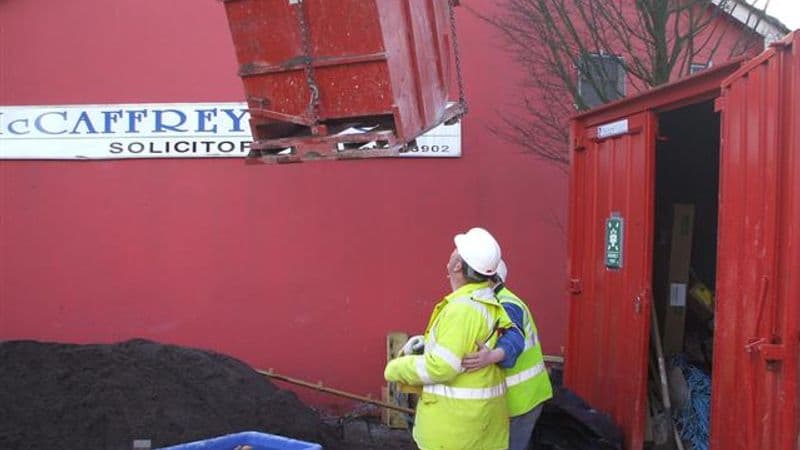
Recent investigations and prosecutions by the Health and Safety Executive (HSE) have surfaced serious lapses in workplace safety across construction, logistics, and waste management. Over the past six weeks, four separate cases have resulted in fines ranging from £40,200 to £2.2 million, including two involving fatalities. The pattern is consistent: employers that failed to plan work properly, assess risks, or supervise day-to-day operations. For UK fire safety professionals, risk assessors, and facilities managers, these cases are a reminder that regulatory compliance is not an administrative exercise, it is what keeps workers alive.
Under the Health and Safety at Work etc. Act 1974 and the Management of Health and Safety at Work Regulations 1999, every employer has a legal duty to assess risks and implement reasonable control measures. HSE enforcement activity has intensified in 2026, with the regulator publicly urging dutyholders to treat near-misses and CCTV-captured unsafe practices as early warnings, not as normal operating conditions.
Construction Firm Sentenced After Worker Injury
A Staffordshire-based construction company and its director were sentenced following an HSE investigation into a serious workplace accident. A worker sustained severe injuries after falling through an unprotected stairwell opening during the construction of an apartment block. The investigation revealed that work at height was not properly planned or controlled, leading to unsafe working practices.
The prosecution was brought under the Work at Height Regulations 2005, which require work at height to be properly planned, supervised, and carried out in a manner that is, so far as reasonably practicable, safe. Falls from height remain the single largest cause of workplace fatalities in the UK construction sector, accounting for a significant share of the HSE’s enforcement caseload each year.
For the full report, see the HSE News release.
Major Builders Merchant Fined £2.2 Million
Need fire safety work done?
Browse our directory of qualified, vetted fire safety professionals across the UK
Browse Directory →One of the UK’s largest building merchants was fined £2.2 million after a tragic incident where worker Paul Coulson was killed. He was crushed by a three-tonne pallet when another worker operated a conveyor, unaware of Coulson’s presence inside. The HSE found that dangerous working practices had been previously captured on CCTV, and the company only implemented changes following the fatality.
The fine, one of the largest levied against a UK building merchant in recent years, reflected the fact that HSE investigators identified the unsafe conveyor-loading practice on CCTV footage taken months before the fatality. The company only stopped the practice after Mr Coulson’s death. This aggravating factor, a previously known risk not acted on, is exactly the sort of conduct the Sentencing Council’s definitive guideline for health and safety offences treats as high-culpability.
Further information can be found on the HSE News release.
Teenage Labourer’s Death Leads to Fine
Jerram Falkus Construction Limited was fined £40,200 after a 19-year-old labourer died from a fall down a ventilation shaft. The HSE investigation found that the shaft was inadequately covered with only a sheet of plasterboard and roofing foam, highlighting severe negligence in ensuring a safe working environment.
The HSE described the covering over the shaft as grossly inadequate. Temporary openings during construction must be protected with covers of sufficient strength to take the weight of any person or material that could foreseeably fall on them, and must be clearly marked. The tragedy is a stark illustration of how simple, low-cost controls, a properly fitted cover and a warning sign, can be the difference between a routine day and a fatality.
The full report is available on the HSE News release.
Waste Management Company Penalised for Safety Failures
Expert insights and guidance from the INFIRISK editorial team, covering fire safety regulations, industry standards, and best practices.
A green waste recycling company in West Sussex faced penalties after an employee broke his leg falling from a compost screening machine. The HSE found that the company failed to assess risks adequately and did not provide a safe system of work, allowing employees to bypass safety measures while cleaning machinery.
Machinery-related incidents are a recurring theme in HSE prosecutions across the waste and recycling sector. The Provision and Use of Work Equipment Regulations 1998 (PUWER) require employers to ensure that equipment is maintained, that guards are in place, and that access to dangerous parts is prevented or minimised. Cleaning and unblocking routines are a known high-risk activity and should never rely on workers reaching inside running machinery.
Details of the investigation can be accessed on the HSE News release.
Common Threads Across These Cases
Although the four cases span different industries, the HSE investigations identified very similar root causes: work not properly planned, risks not assessed, supervision insufficient, and warning signs ignored. In every case the control measures that would have prevented the incident were well known, inexpensive, and widely documented in HSE guidance. The fines reflect the distance between what the law requires and what was actually in place on the day.
There is also a reporting angle. Three of the four cases turned on information that existed before the incident: CCTV footage, known unsafe practices, and prior near misses. Under RIDDOR, employers have a duty to report specified injuries and dangerous occurrences, and the HSE has recently opened a public consultation on the future of RIDDOR reporting, signalling that the reporting framework itself is now under review.
Practical Takeaways for UK Fire Safety Professionals
Ensure risk assessments are suitable and sufficient, documented, and reviewed whenever the work, the workplace, or the workforce changes.
Treat CCTV footage, toolbox talks, and near-miss reports as early warning systems, not as paperwork. Act on what they show.
For work at height, apply the hierarchy of controls: avoid, prevent, minimise. Collective protection such as guard rails or covers should come before personal protective equipment.
Verify that temporary openings, shafts, and voids are protected with robust, load-bearing covers and clearly marked as hazards.
Ensure machinery cleaning and maintenance routines include isolation procedures. Workers should never reach inside running equipment.
Keep accurate records of training, inductions, and supervision so that you can demonstrate competence if challenged by the regulator.
Further Reading from the HSE
Need fire safety work done?
Post your requirement on Infirisk and receive competitive proposals from qualified, vetted fire safety professionals across the UK

INFIRISK Editorial
INFIRISK Team
Expert insights and guidance from the INFIRISK editorial team, covering fire safety regulations, industry standards, and best practices.
32 articles published
IT
More from INFIRISK Team